Two Different Parts, One Common Goal
Homeowners often use the terms "chimney crown" and "chimney cap" interchangeably, but they are two distinct components that serve different — yet equally important — functions at the top of your chimney. Understanding what each one does helps you recognize when something is wrong and why prompt repair protects your entire chimney system from the kind of water damage that Colorado's climate is so good at causing.
What Is a Chimney Crown?
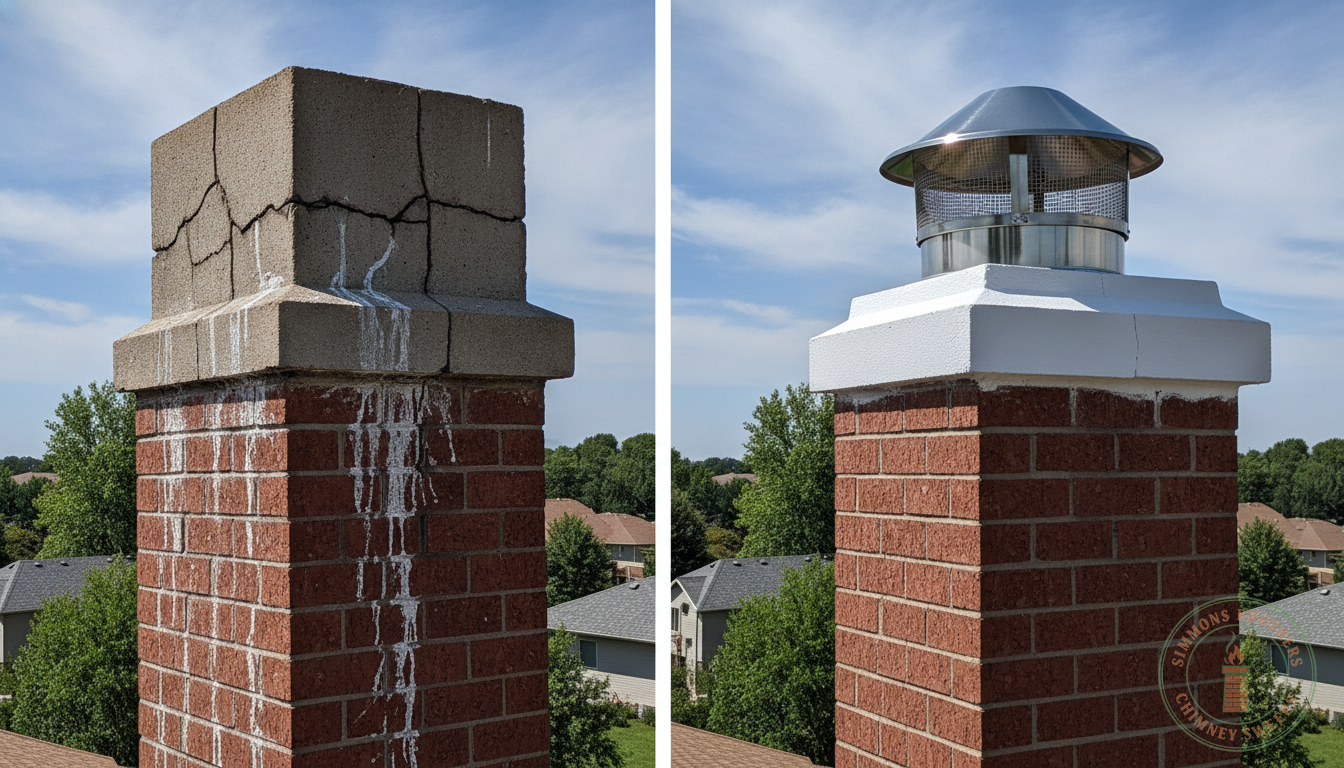
The chimney crown is the concrete or mortar slab that covers the very top of the brick chimney structure. It surrounds the flue tile opening, slopes slightly outward, and overhangs the brick face to direct rainwater and snowmelt away from the masonry below. Think of it as the chimney's roof — a solid barrier between the top course of bricks and the open sky.
In Westminster and the rest of Colorado's Front Range, the crown takes a beating every year. Summer sun cures and shrinks the concrete. Winter freeze-thaw cycles force water into hairline cracks, which expand the cracks further each time the water freezes. Left unaddressed, crown deterioration progresses from surface cracking to large voids that allow water to pour directly into the chimney structure, deteriorating the liner, rusting the damper, and spalling the bricks and mortar joints below. Simmons Brothers Chimney Sweeps repairs damaged crowns using flexible elastomeric crown coat for minor cracking and full concrete rebuilds for severely compromised crowns — see our chimney crown repair service for details.
What Is a Chimney Cap?
The chimney cap is the metal cover that sits directly on top of the flue opening — the hole in the center of the crown. While the crown protects the masonry structure around the flue, the cap protects the interior of the flue itself. A properly installed cap prevents rain and snow from falling directly into the flue, keeps birds, squirrels, and raccoons from nesting inside, blocks downdrafts that push cold air or smoke back into your home, and provides a spark arrestor screen that catches burning embers before they land on your roof or landscaping.
Chimney caps come in galvanized steel, stainless steel, and copper, in single-flue and multi-flue configurations, and in standard or custom sizes for non-standard chase tops. Our chimney cap installation service covers all of these options with same-day installation available for most standard sizes.
How Westminster's Weather Affects Both Components
Westminster averages around 300 days of sunshine per year, which sounds wonderful — but that UV exposure accelerates the aging of concrete crowns and galvanized steel caps alike. Add in the roughly 60 inches of annual snowfall in the greater Denver metro area, summer thunderstorms that can drop significant rain in short bursts, and the freeze-thaw cycles that are a hallmark of Colorado shoulder seasons, and you have conditions that stress every component at the top of your chimney year-round.
- Spring: Snowmelt and spring rain probe every existing crack in the crown. This is when water damage that developed over winter becomes visible as staining or efflorescence on the brick face.
- Summer: High UV exposure and heat cause concrete and mortar to dry, shrink, and develop new hairline cracks.
- Fall: The ideal time for a pre-season inspection to catch any summer or spring damage before you start lighting fires.
- Winter: Freeze-thaw cycles widen existing cracks rapidly. Uncapped chimneys fill with snow and ice.
Warning Signs That Your Crown or Cap Needs Attention
You don't have to climb on your roof to notice the early signs of crown or cap failure. Watch for these indicators from the ground or inside your home:
- White mineral staining (efflorescence) streaking down the brick face of your chimney
- Flaking or spalling brick faces near the top of the chimney
- Water sounds or dripping inside the firebox after rain or snowmelt
- Musty odors from the fireplace during humid weather
- Animal scratching or chirping sounds coming from inside the flue
- Visible rust staining around the flue opening at the top of the chimney
- A cap that is visibly tilted, missing, or has deteriorated mesh screens
The Most Effective Protection Uses Both
Replacing a cap without repairing a cracked crown — or repairing the crown without capping the flue opening — leaves your chimney partially protected. Water will find whatever gap remains. The most cost-effective approach for Westminster homeowners is to address both at the same time. Simmons Brothers regularly pairs crown repair or rebuilding with new cap installation in a single visit so your entire chimney top is sealed and protected before the next season begins.
If you're also seeing mortar joint erosion on the brick face below the crown, our chimney masonry repair and tuckpointing service can restore the full chimney structure during the same appointment. We serve Westminster neighborhoods including Shaw Heights and Hyland Hills, as well as nearby communities like Arvada and Federal Heights.
Schedule Your Chimney Top Inspection Today
Not sure whether your crown or cap is in good shape? Start with a professional chimney inspection from Simmons Brothers. Our technicians evaluate the full chimney system — top to bottom — and give you a written report with photos so you know exactly what needs attention and what can wait. Call us at (720) 881-0206 or email [email protected]. We're available seven days a week, 8:00 AM to 6:00 PM.
Need Service?
Call +17208810206 or fill out our online form for a free, no-obligation quote.
Request Free Quote