What Is a Chimney Liner and What Does It Do?
A chimney liner — also called a flue liner — is the interior lining that runs from your fireplace or appliance all the way to the top of your chimney. It serves three critical functions that make it arguably the most important safety component in your entire chimney system:
- Containment: It contains combustion gases, including deadly carbon monoxide, and directs them safely out of your home rather than allowing them to seep through the surrounding masonry into living spaces.
- Heat insulation: It protects the combustible materials surrounding your chimney — framing, insulation, and interior walls — from the extreme heat generated by your fireplace or heating appliance.
- Corrosion protection: It shields the masonry structure from the corrosive byproducts of combustion, which would otherwise erode the mortar and brick from the inside.
Without a properly functioning liner, your chimney cannot safely contain a fire or vent combustion gases. This isn't a minor maintenance issue — it's a fundamental safety requirement.
What Types of Chimney Liners Exist?
Westminster homes — particularly those built before the 1980s — may have one of several liner types, each with different characteristics and lifespans:
- Clay tile liners: The most common type in older masonry chimneys. Clay tiles are durable when intact but susceptible to cracking from chimney fires, rapid temperature changes, and the acidic condensation produced by modern high-efficiency gas appliances. A cracked clay tile liner must be repaired or relined.
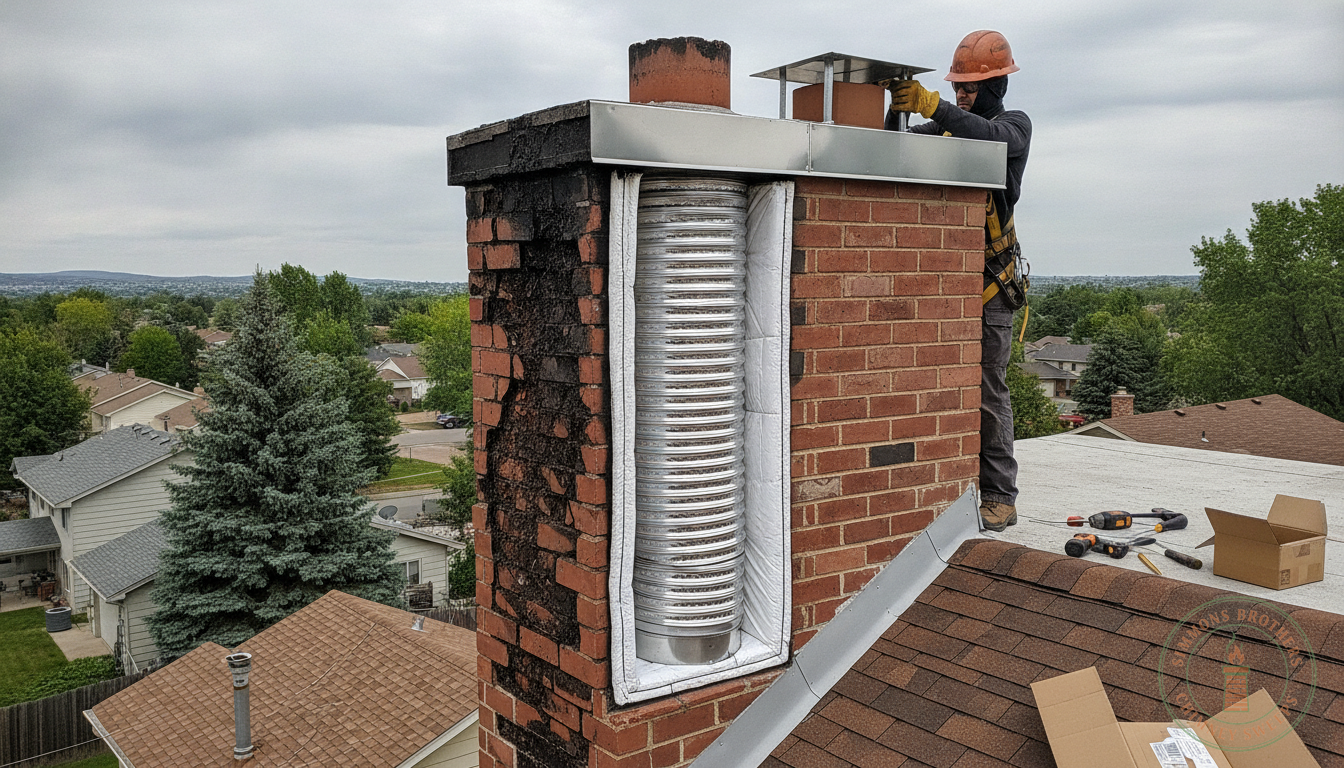
- Stainless steel liners: The gold standard for relining existing chimneys. Flexible stainless steel liners can navigate offsets and bends that rigid sections cannot, making them ideal for most existing masonry chimney configurations. They are sized to the specific appliance they serve and typically carry manufacturer warranties of 15 to 25 years.
- Cast-in-place liners: A poured insulating material applied to the interior of the existing flue to form a smooth, seamless liner. Useful in situations where the existing masonry structure provides adequate support.
- Aluminum liners: Suitable only for certain low-temperature gas appliances and not recommended for wood-burning or high-efficiency applications.
Simmons Brothers Chimney Sweeps installs flexible stainless steel, rigid stainless, and cast-in-place liner systems throughout Westminster. Learn more about our chimney liner installation service.
How Do You Know If Your Chimney Liner Is Damaged?
Unfortunately, liner damage is almost never visible without specialized equipment. The flue is a long, dark, enclosed space, and the most critical areas — joints between clay tile sections, for example — are impossible to see from the firebox opening or from the chimney top. This is why a high-definition camera inspection is the only reliable way to assess liner condition.
That said, there are exterior signs that may indicate liner problems:
- A chimney fire has occurred — even a small one you may not have noticed produces intense heat that can crack clay tile liners
- White staining on interior walls adjacent to the chimney, indicating moisture migration through the masonry
- Cracked or damaged clay tile fragments found in the firebox or clean-out door
- Carbon monoxide detector alarms triggering without an obvious cause
- Smoke or combustion odors detected in rooms adjacent to the chimney
- A recent fuel-type change — for example, converting from wood to a gas insert — which changes the combustion byproducts and temperature profile the liner must handle
When Is a New Chimney Liner Required?
A new liner is typically required in the following situations that Simmons Brothers commonly encounters among Westminster homeowners:
- After a chimney fire: Even a small chimney fire can crack clay tile liners. A Level 2 inspection after any chimney fire will assess liner damage.
- When buying an older home: Many Westminster homes built before the 1990s have clay tile liners that are now at or past their service life. A pre-purchase chimney inspection protects buyers from inheriting a serious safety hazard.
- When installing a new insert or stove: EPA-certified wood inserts and high-efficiency gas appliances often require a properly sized liner to achieve correct draft and safe venting. The existing flue may be too large.
- When the existing liner is cracked or missing sections: Partial liner failure is still liner failure. If the containment is breached anywhere along the flue, combustion gases can enter the home.
What Does the Liner Installation Process Look Like?
When Simmons Brothers installs a flexible stainless steel liner, the process typically follows these steps:
- We measure the existing flue dimensions and the appliance specifications to select the correct liner diameter for proper draft.
- The liner is lowered into the flue from the top of the chimney, with a technician at the firebox end guiding it into position.
- An insulation wrap is applied where appropriate to improve draw, reduce condensation, and meet clearance requirements.
- Top plate hardware is secured at the chimney crown and a connector is installed at the appliance end in the firebox or utility room.
- We perform a smoke and draft test before leaving your property to confirm the system is performing correctly.
After installation, we recommend pairing your new liner with a chimney cap installation to protect the top termination from water, animals, and debris. A properly capped liner lasts significantly longer than an exposed one.
Serving Westminster and the Surrounding Area
Simmons Brothers Chimney Sweeps provides chimney liner installation and replacement services throughout Westminster and neighboring communities. Whether you're in Shaw Heights, Hyland Hills, or further afield in Arvada or Thornton, our team can assess your liner condition and recommend the right solution. We also serve homeowners in Sherrelwood and Federal Heights.
If you're not sure whether your liner needs attention, the right first step is a professional chimney inspection in Westminster. Our technicians use high-definition cameras to travel the full length of your flue and document exactly what they find — no guesswork, no unnecessary repairs, just an honest assessment and a written report you can rely on. Call Simmons Brothers Chimney Sweeps at (720) 881-0206 or email [email protected] to schedule your inspection. We're open Monday through Sunday, 8:00 AM to 6:00 PM.
Need Service?
Call +17208810206 or fill out our online form for a free, no-obligation quote.
Request Free Quote